
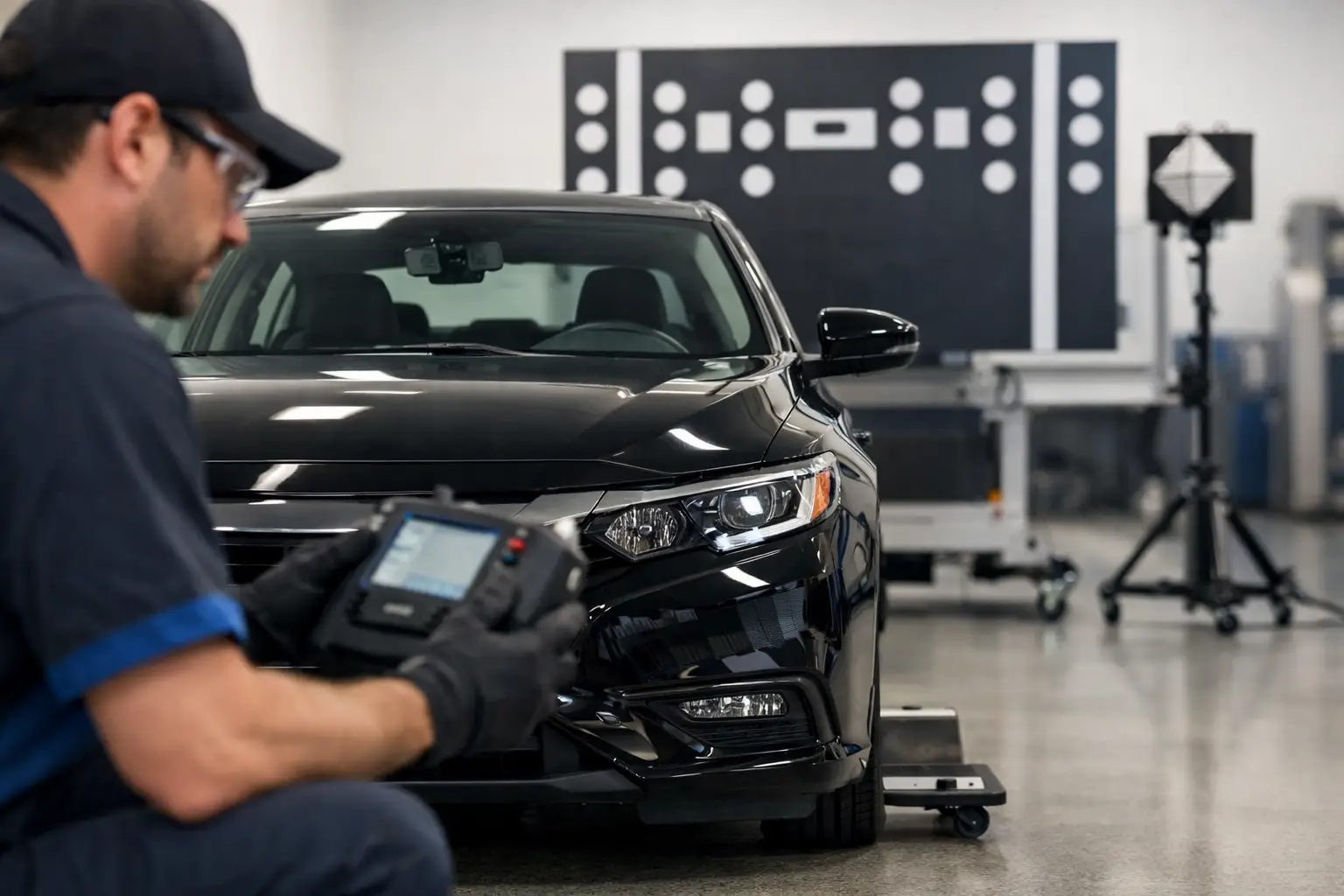
A new windshield can look perfect and still leave an important job unfinished. ADAS calibration after windshield replacement restores the accuracy of the forward-facing camera behind the glass, helping safety features such as lane-departure alerts, automatic emergency braking, and adaptive cruise control work as the manufacturer intended.
For drivers in Denver and Birmingham, this is not a detail to postpone. A commute through traffic, a school pickup, or a long highway drive is exactly when those systems may be called on. Replacing the glass without addressing required calibration can leave a camera seeing the road from a slightly different reference point - even when the windshield itself is installed correctly.
Why ADAS Calibration After Windshield Replacement Matters
Advanced Driver Assistance Systems, commonly called ADAS, use cameras, radar, sensors, and vehicle software to monitor road conditions. Many newer vehicles place a forward-facing camera at the top center of the windshield, usually near the rearview mirror. That camera may recognize lane markings, vehicles ahead, pedestrians, traffic signs, or changes in speed.
The windshield is part of that camera's working environment. Removing and replacing it can alter the camera's position or the angle through which it views the road by a very small amount. Small changes matter. If the system is not recalibrated when required, a lane-warning alert could activate at the wrong time, or a safety feature may not perform as designed.
Calibration does not make a vehicle drive itself, and it does not replace attentive driving. It is a precise process that allows the vehicle to re-establish the baseline for its cameras and sensors after glass work. Think of it as confirming that the vehicle and its safety technology agree on where the road is.
What Calibration Actually Involves
A proper calibration starts with identifying the vehicle's equipment and following the applicable manufacturer procedure. The technician checks for diagnostic trouble codes, confirms that the correct windshield and camera-related components are in place, and connects professional diagnostic equipment to the vehicle.
Some vehicles need static calibration. This process is performed with the vehicle parked in a controlled, level area while calibrated targets are positioned at exact distances and heights. The camera reads those targets, and the scan tool guides the system through its reset and verification process.
Other vehicles need dynamic calibration. In that case, the vehicle must be driven under specific conditions so the camera can recognize lane lines, traffic, and other road references. The required route, speed range, weather, and road markings vary by manufacturer. Some vehicles require both static and dynamic procedures.
The final step is just as important as the setup: verification. A completed calibration should produce a documented result showing whether the procedure passed or whether the vehicle needs additional diagnosis. If a camera fault, damaged bracket, warning light, or pre-existing sensor issue prevents a successful calibration, the right next step is to explain that clearly rather than treating a partial result as complete.
Does Every Windshield Replacement Require Calibration?
No. Whether calibration is needed depends on the year, make, model, trim level, and installed driver-assistance features. An older vehicle with no camera-based systems may not require it. A newer vehicle can look similar from the outside but have a windshield-mounted camera that makes calibration necessary.
That is why assumptions cause problems. The presence of a camera housing near the mirror is a strong clue, but the vehicle identification number and manufacturer service requirements provide the answer. Some vehicles also require calibration after related work, such as camera removal, front-end repairs, suspension changes, wheel alignment, or impact damage.
A vehicle may display an ADAS warning message immediately after replacement, but no warning light does not automatically mean calibration is unnecessary. Many systems need to be checked against the manufacturer's procedure, not just judged by the instrument panel.
The Windshield and Installation Quality Matter Too
Calibration can only be as dependable as the work that comes before it. The replacement windshield must meet the correct specifications for the vehicle and its camera system. Features such as the camera viewing area, acoustic interlayer, tint band, heating elements, rain sensor provisions, and heads-up display compatibility can vary between trims.
The camera mount and bracket also need careful attention. If a bracket is damaged, loose, contaminated, or incorrectly positioned, calibration may fail or the camera may not perform reliably. Proper installation includes preparing the bonding surface, using approved materials, and allowing the urethane to reach its safe-drive-away time before the vehicle is returned to service.
At Stateline Auto Glass & Calibration, certified technicians use OEM-quality glass and 30-minute safe-drive-away urethane, then address required ADAS calibration as part of the replacement process. That approach avoids sending customers away with excellent new glass but an unfinished safety-system requirement.
Can ADAS Calibration Be Done at Your Home or Office?
Often, yes. Mobile calibration is a practical option when the location has the right conditions. A technician needs sufficient space, a reasonably level surface, appropriate lighting, and an environment where calibration targets can be placed accurately. Dynamic procedures also require a suitable road route nearby.
It depends on the vehicle and the site. A crowded parking garage, steep driveway, heavy rain, poor lane markings, or a location with limited space may not be suitable for a particular static or dynamic procedure. When that happens, moving the job to a better location is not an inconvenience for its own sake. It protects the accuracy of the result.
A qualified mobile glass company should assess those requirements before or during the appointment, rather than promising that every calibration can be performed under every condition. The goal is convenience without cutting corners.
What the Appointment Should Look Like
The process should feel straightforward. After you request a quote or start an insurance claim, the vehicle details are reviewed to determine the correct glass and whether ADAS calibration is likely required. On appointment day, the technician replaces the windshield, protects the vehicle's interior and exterior work areas, and cleans up glass and installation materials when the work is complete.
If calibration is required, the technician performs the applicable procedure and verifies the result before closing out the service. You should receive clear information about the work completed, any limitations that affected the procedure, and any next steps if a separate vehicle issue is discovered.
Insurance coverage varies by policy, deductible, carrier, and state, but many comprehensive policies cover windshield replacement and related calibration when it is required. A glass provider can help coordinate the claim, while a cash quote gives you a clear alternative if you prefer to pay directly. The key is asking about calibration early, so it is not treated as a surprise after the windshield has already been installed.
Warning Signs You Should Not Ignore
After a windshield replacement, contact your glass provider or a qualified repair facility promptly if you notice any of the following:
- An ADAS, camera, collision-warning, or lane-assist message on the dashboard.
- Features such as lane keeping, adaptive cruise control, or automatic braking that are unavailable.
- A calibration procedure reported as incomplete or unsuccessful.
- A damaged camera cover, loose mirror-area trim, or an obvious issue around the camera housing.
These symptoms do not always mean the windshield replacement caused the problem. A vehicle may have a pre-existing fault, previous collision damage, or a worn component that only became apparent during the calibration check. What matters is getting an accurate diagnosis instead of ignoring a warning that affects safety technology.
A Safer Finish to a Necessary Repair
Windshield damage already interrupts your day. The right repair should not create a second errand or leave you wondering whether your vehicle's safety features are ready for the road. Ask whether your vehicle requires ADAS calibration before scheduling the replacement, and choose a provider prepared to handle both jobs with the same attention to detail. That one question helps turn a new windshield into a properly completed repair.